





The Government of the Democratic Republic of the Congo (DRC) is stepping up efforts to secure approximately $1 billion in financing from the World Bank Group to fast-track the development of the strategically গুরুত্বপূর্ণ Lobito Corridor. The project is seen as a cornerstone for improving regional connectivity, enhancing trade flows, and unlocking economic growth across Central and Southern Africa.
The renewed push was highlighted during the “Transforming Transportation” global forum held in Washington, D.C. on March 10, 2026. Speaking at the event, the DRC’s Minister of Infrastructure and Public Works, John Banza Lunda, urged stakeholders to accelerate the financing process for key infrastructure linked to the corridor.
Driving Regional Integration
The Lobito Corridor is designed to connect the mineral-rich regions of southeastern DRC with the Atlantic coast via Angola, while also strengthening transport links with Zambia. At its core, the initiative aims to streamline the export of critical minerals through the Port of Lobito.
Beyond its role as a mining export route, the corridor is expected to significantly reduce transportation costs, improve logistics efficiency, and stimulate cross-border trade. Congolese authorities view the project as a transformative infrastructure backbone capable of driving broader regional economic integration.
Engagement with the World Bank
On the sidelines of the forum, Minister Banza Lunda held strategic talks with Binyam Reja, Director of Transport Infrastructure for East and Southern Africa at the World Bank. Discussions focused on finalising the requested $1 billion financing package to support critical corridor-linked infrastructure.
The World Bank indicated its willingness to advance the process, pending submission of final technical documentation required for project evaluation. These documents are currently being prepared by the DRC’s infrastructure and transport ministries.
To fast-track progress, the minister announced the formation of a dedicated technical commission tasked with compiling and submitting a comprehensive memorandum to the World Bank for validation.
High-Level Representation
The DRC delegation in Washington included senior officials from key infrastructure institutions, reflecting the importance of the project at the national level. Coordination efforts were also highlighted with Jean-Pierre Bemba Gombo, Deputy Prime Minister and Minister of Transport, to ensure alignment of technical data required for the financing process.
Priority Infrastructure Investments
During engagements with World Bank experts, including Peter Taniform, Congolese officials emphasised the need to upgrade domestic infrastructure to fully leverage the corridor’s potential.
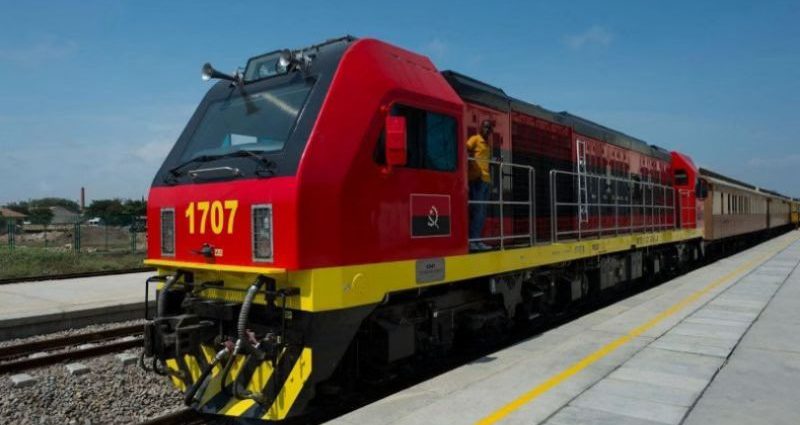
A major priority is the rehabilitation of approximately 80km of railway between Kolwezi and Dilolo—an essential link connecting the DRC’s mining hub to the Angolan rail network leading to Lobito.
In addition, authorities outlined a broader national connectivity programme focused on:
Rehabilitating 11 internal road corridors
Strengthening links between transport networks and agricultural zones
Leveraging infrastructure development as a tool for poverty reduction
Through these investments, the DRC aims to position the Lobito Corridor not only as a critical export route for minerals but also as a catalyst for economic diversification, regional trade expansion, and long-term development.
