



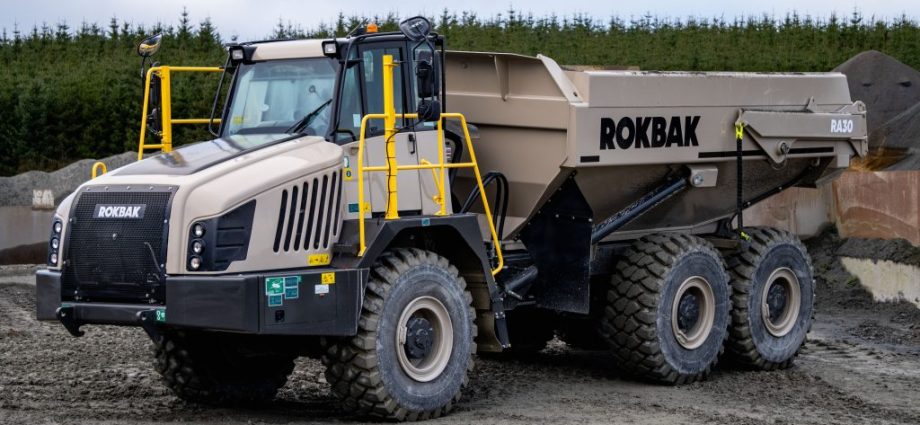
Volvo Construction Equipment (Volvo CE) has announced plans to shut down its Rokbak articulated dump truck (ADT) business, citing rising operational costs, supply chain pressures, and ongoing global trade challenges. The decision, while global in nature, carries implications for mining markets such as Zambia, where haulage equipment plays a critical role in copper production and infrastructure development.
Volvo CE stated that increasing costs and market headwinds have significantly impacted the financial viability of the Rokbak division, making continued operations unsustainable. The company confirmed that production of Rokbak articulated haulers is expected to cease in the second half of 2026, following a consultation process.
Implications for Zambia’s Mining Operations
Although Rokbak has a relatively small global market share, articulated dump trucks remain essential in Zambia’s mining sector, particularly in mid-sized operations, quarrying, and construction-linked mining activities. Equipment reliability, availability of parts, and long-term support are key concerns for operators across the Copperbelt and North-Western Province.
Volvo CE has moved to reassure customers that support will continue throughout the transition. A dedicated Rokbak team will remain in place to provide aftermarket services, including parts supply, technical support, and operator training. This commitment is particularly important for African markets, where equipment lifecycle support often determines procurement decisions.
Strategic Shift Toward Core Haulage Portfolio
With the Rokbak exit, Volvo CE will focus on strengthening its core haulage offering. Its articulated dump truck range includes the A25, A30, A35, A40, A45, A50, and A60 models, alongside rigid haulers such as the R60, R70, and R100. These machines are widely recognised in mining environments for their durability and productivity, making them viable alternatives for Zambian operators seeking long-term fleet stability.
For mining companies in Zambia, this shift may accelerate a transition toward larger, more technologically advanced haulage fleets, particularly as operations scale up to meet global copper demand driven by the energy transition.
Global Pressures, Local Realities
The decision also reflects broader global industry pressures, including declining equipment demand in certain markets and the impact of international trade dynamics. While Rokbak accounted for a small portion of global ADT sales, the overall market for financed articulated dump trucks saw a decline in 2025, highlighting a more cautious investment environment.
For Zambia, where mining remains a cornerstone of the economy, such global shifts underscore the importance of supplier stability and diversified equipment sourcing strategies. Mining companies may increasingly prioritise OEMs with strong regional support networks and proven long-term product roadmaps.
Legacy and Transition
Rokbak, formerly known as Terex Trucks, has a long industrial heritage dating back to 1934, with manufacturing based in Motherwell, Scotland since 1950. Despite its exit from production, the brand’s legacy in off-road haulage remains significant.
Volvo CE emphasised that its priority now is to ensure a smooth transition for employees, customers, and partners. As Paul Douglas, Managing Director of Rokbak, noted, the company’s focus is on maintaining support and honouring commitments during this period of change.
Outlook for Zambia
For Zambia’s mining sector, the closure of the Rokbak business is unlikely to disrupt operations in the short term, given Volvo CE’s continued support and the availability of alternative models. However, it reinforces the need for forward planning in fleet management, supplier partnerships, and capital investment decisions.
As the country continues to expand copper production and invest in mining infrastructure, equipment reliability, aftermarket support, and alignment with global OEM strategies will remain critical factors shaping the sector’s growth.
