









The export structure of the Democratic Republic of the Congo highlights a growing economic vulnerability driven by heavy reliance on a single market and a dominant commodity, according to a report by Target Sarl.
The report shows that China accounts for around 62% of the DRC’s mineral export volumes, reinforcing its position as the country’s primary trading partner. This strong link is supported by extensive Chinese investment in the mining sector, particularly in production and infrastructure. However, such concentration increases exposure to risks linked to shifts in Chinese demand or broader geopolitical changes.
At the commodity level, copper dominates the export profile, representing approximately 89% of total mining export value. Gold contributes about 8%, while cobalt accounts for roughly 2%. This imbalance leaves the economy highly sensitive to fluctuations in global copper prices, which are closely tied to industrial demand, especially in Asian markets.
Despite strong export volumes, much of the value generated from these resources is realised outside the country. International trading and processing hubs such as United Arab Emirates, Mauritius and Singapore play key roles in handling Congolese minerals, particularly gold and the 3Ts—tin, tantalum and tungsten. As a result, a significant portion of value addition occurs beyond the DRC’s borders.
Logistics also reflect regional dependence. South Africa remains a major export corridor via the Port of Durban, particularly for minerals from the Katanga region. However, alternative routes are gaining traction, with Mozambique’s ports of Beira and Maputo becoming increasingly competitive, especially for shipments to Asia.
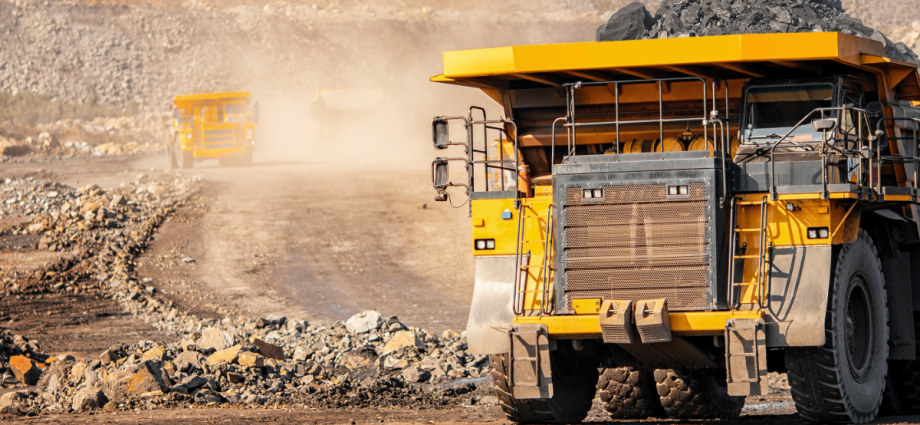
Mining exports are projected to approach $40 billion in 2025, underlining the sector’s importance to the national economy. Nevertheless, the report warns that this strong performance conceals structural challenges, including limited diversification, reliance on external markets, and insufficient domestic processing capacity.
Looking ahead, strengthening economic resilience will require diversifying export destinations, expanding local beneficiation, and improving integration into global value chains. Without these changes, the DRC’s mining-driven economy will remain vulnerable to external shocks and commodity price volatility.
