
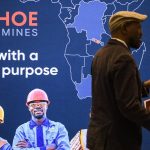
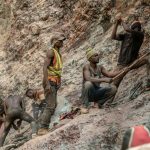





The Democratic Republic of Congo (DRC) has reiterated its commitment to an open and inclusive investment climate across its mining sector, welcoming partnerships from all global players as demand for critical minerals continues to surge. Minister of Mines Louis Watum Kabamba reaffirmed this stance during a press briefing on Thursday, 27 November 2025, emphasising that the country’s strategy is anchored in multilateral cooperation rather than geopolitical alignment.
A Sector Open to All Compliant Investors
Minister Kabamba made clear that the DRC does not tether its mining ambitions to any single political or economic bloc. Instead, the government encourages investment from any nation or corporation prepared to operate within Congo’s legal and regulatory frameworks.
While acknowledging governance challenges in parts of the industry, he maintained that equal treatment and compliance remain non-negotiable for all operators—foreign or domestic.
China’s Transformative Impact on Copper Production
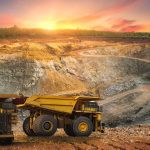
The minister highlighted China’s influence in catapulting the DRC to its current position as the world’s second-largest copper producer. Chinese capital and industrial capacity have played a decisive role in developing large-scale mining projects across the country, contributing to annual output that now exceeds 3 million tonnes.
Kabamba stressed that although some practices by individual operators may warrant criticism, the broader economic impact of Chinese involvement cannot be ignored. With additional power-generation capacity, he believes the DRC could potentially challenge Chile for the global top spot in copper production.
Recent compliance issues involving Chinese firm CDM were cited as reminders that all companies must adhere strictly to Congolese law.
Growing U.S. Interest in Strategic Minerals
Alongside China’s long-standing presence, the United States has recently intensified its engagement with the DRC—driven largely by the global race to secure critical minerals essential for clean energy technologies.
Kabamba confirmed ongoing discussions with Washington regarding a strategic minerals partnership aligned with the Washington Agreement, which also supports stability initiatives in eastern Congo. He noted that American stakeholders now fully recognise the DRC’s significance in global mineral supply chains.
Despite hosting one of the world’s richest mineral endowments, the minister reiterated that less than 10% of the country’s geological potential has been explored—leaving substantial room for new entrants.
Kongo Central: An Emerging Mining Frontier
The minister singled out Kongo Central as one of the country’s most promising mining provinces, describing it as a “geological mirror of Katanga” with copper, manganese, gold and other critical mineral deposits.
Kongo Central offers several strategic advantages for investors:
- Proximity to the Port of Matadi
- Access to hydropower from the Inga complex
- Integrated transport networks (road and rail)
- Close links to human capital and services in Kinshasa
These factors greatly reduce the capital intensity normally associated with mining developments in remote areas, positioning the province as a high-potential investment destination.
Rebalancing Partnerships While Diversifying Alliances
China remains Congo’s largest trading partner, absorbing most of the country’s mineral exports and financing major infrastructure projects through resource-backed agreements. Notable among these is the Sino-Congolese Mines venture, established in 2008.
However, the government is currently reviewing several long-term contracts to improve transparency and ensure that national interests are fully protected. At the same time, officials are working to broaden the country’s pool of international partners in line with its multilateral investment strategy.
